How Irish Hotels Save 15%+ OTA Commission with AI
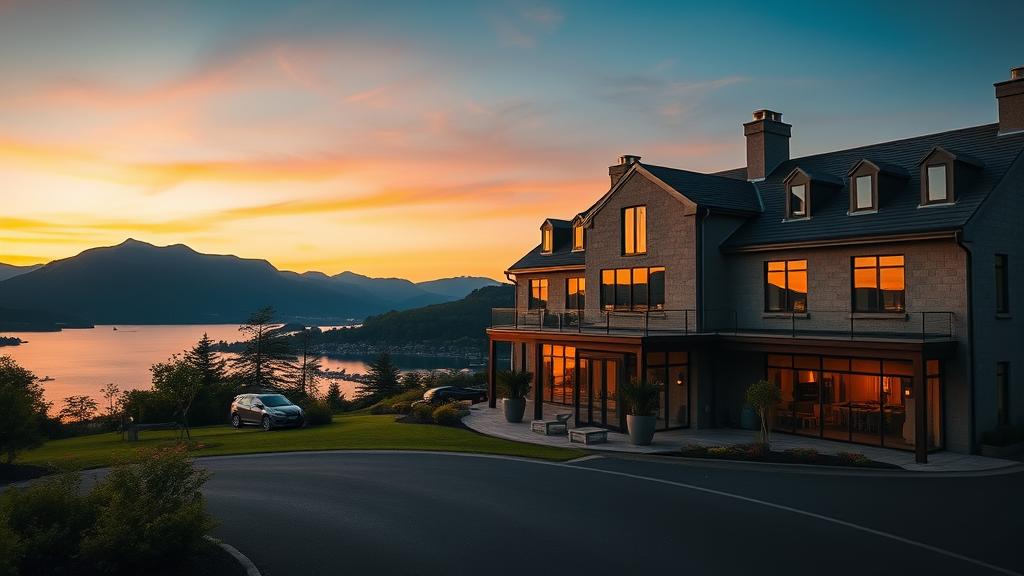
How Irish Hotels Save 15%+ OTA Commission with AI
You are losing 15-20% of every booking by handing it to Booking.com. In 2026, that is not inevitable — it is a choice.
Every booking through Booking.com or Expedia costs your hotel 15%-20% of the total bill (Fáilte Ireland, Booking.com Research Summary). In 2026, with Irish hotel profit margins under pressure (ThinkBusiness, Hotel Sector 2024 Insights), this means you are essentially giving away half your net profit to intermediaries.
If you run an independent hotel in Kerry, Cork, or Galway — this article will show you exactly how to reclaim that revenue, step by step, with real numbers and a deployment timeline.
The Problem: OTA "Dictatorship" Is Killing Your Margin
According to the Irish Hotels Federation (2025), 63.4% of independent hotel bookings now flow through OTAs — up from 61% the year before, with some regional markets approaching 80% (IHF analysis, LinkedIn).
The problem is not that Booking.com doesn't attract guests — it does brilliantly. The problem is structural: a guest who booked with you once through an OTA has no habit of visiting your site directly for a repeat stay.
You are renting your customers from Booking.com, not owning them.
Think about it. Every time a repeat guest returns to Booking.com instead of your website, you pay €28 for a €140 booking that costs you almost nothing to fulfil. Over a year, that is the difference between renovating the building and barely breaking even.
The Irish hospitality sector has been squeezed by rising energy costs (+18% since 2022), minimum wage increases, and insurance premiums (Central Statistics Office, Energy Price Index). Adding OTA commission into this mix leaves many independent hotels with single-digit net margins — if that.
How AI Direct Booking Works — Step by Step
Before we talk about money, let me explain what actually happens when a guest lands on your website with an AI booking assistant:
GUEST LANDS ON YOUR WEBSITE

       │

       ▼

AI CHAT: "Welcome to The Lakeside Hotel!

         Looking for a room for tonight or

         planning a future stay?"

       │

       ▼

GUEST: "Checking in Friday for 2 nights"

       │

       ▼

AI CHECKS YOUR PMS IN REAL TIME

  → 3 rooms available (Standard, Deluxe, Superior)

       │

       ▼

AI: "We have a Deluxe room at €145/night.

     If you book directly, we'll include:

     ✓ Late checkout (1pm)

     ✓ Complimentary tea/coffee on arrival

     That's 20% less than OTA prices.

     Shall I reserve it?"

       │

       ▼

GUEST: "Yes, please"

       │

       ▼

BOOKING CONFIRMED → Confirmation email sent

                    Room blocked in PMS

                    Commission saved: ~€52
This is not science fiction — it is a standard conversational flow that can be deployed on any website in under a week. The AI handles availability checks, answers questions about parking, pet policy, local attractions, upsells breakfast or spa treatments, and processes the booking — all without human intervention.
A Realistic Scenario: The Lakeside Hotel, Killarney
Let me walk you through a concrete example based on actual numbers from a typical 30-room independent hotel in Killarney.
Baseline (current state):
- Average Daily Rate: €140
- Occupancy: 70% (industry average for Kerry independent hotels, Fáilte Ireland, Tourism Performance Report 2025)
- 21 occupied rooms × 365 days = 7,665 room nights/year
- Annual revenue: ~€800,000 (all channels)
- OTA share: 63.4% (4,859 room nights booked via OTA)
- Average OTA commission: 18%
- Annual commission paid: €144,000 After AI direct booking integration (conservative estimate):
The AI assistant converts just 15% of OTA-originated traffic into direct bookings — guests who would have booked through Booking.com but were intercepted on your website.
- Redirected bookings: 15% of 4,859 = 729 room nights
- Commission saved per night: €140 × 18% = €25.20
- Annual commission saved: €18,370 Add in upsells (breakfast packages, late checkout, spa treatments) that the AI suggests during the conversation — conservatively +€5 revenue per direct booking — and you are looking at an additional €3,645/year.
Total annual benefit: €22,015
Cost of deployment:
- Setup: €2,500
- Monthly hosting & maintenance: €99/month (€1,188/year)
- Total Year 1 investment: €3,688 Net Year 1 savings: €18,327 (payback in 2 months)
By Year 2, the system has paid for itself 5× over, and every direct booking after that is pure margin.
Why Not Just Offer a Discount on Your Website?
Good question. Many hotels try this: "Book direct and save 10%." It works in theory, but in practice it fails for three reasons:
| Issue | Discount-Only Approach | AI Assistant Approach |
|-------|----------------------|----------------------|
| Engagement | Guest must find and understand the offer | AI proactively engages the guest |
| Trust | "Is this the best price?" doubt remains | AI shows real-time rate comparison |
| Friction | Guest still fills in a form | AI converses like a receptionist |
A static discount banner on your website gets maybe 2-3% click-through. An interactive AI chat window gets 15-25% engagement — because it talks to the guest, not at them (Hospitality Tech, Chatbot Engagement Study 2025).
Why Not Just Hire Another Receptionist?
Another common objection. Let's compare the costs for a hotel in Killarney:
| Cost | Human Receptionist | AI Assistant |
|------|-------------------|--------------|
| Annual salary (min. wage + PRSI) | €32,000–€38,000 | €1,188/year |
| Available hours | 37.5/week (covers 39%) | 24/7/365 (100%) |
| Covers night bookings | No (only shifts) | Yes |
| Handles concurrent guests | 1–2 | Unlimited |
| Speaks multiple languages | 1–2 typically | 15+ languages |
| Training time | 2–4 weeks | Instant |
| Consistency of messaging | Varies by person | Always on-brand |
I am not suggesting you replace your staff with a bot. The point is to free them from the repetitive "What time is checkout?" questions so they can focus on the things that actually matter — making guests feel welcome.
"What If Guests Don't Want to Talk to a Bot?"
Valid concern. Here is how you handle it:
- The AI does not pretend to be human. It introduces itself: "I'm the Lakeside's virtual concierge — how can I help?" Guests are comfortable — they use Siri and Alexa daily.
- One-click handoff. If the guest types something complex, the AI gracefully says: "Let me connect you with our receptionist, Áine. She'll be with you in a moment." The human gets the full chat context.
- Fallback to form. If the AI cannot resolve the request, it offers a traditional booking form. Nothing is lost. Most importantly: this is not about replacing the human touch. It is about extending the reach of your human team to cover the 60% of hours when the reception desk is understaffed or closed entirely.
Who Needs a PMS Integration? (And Who Doesn't)
If your hotel already uses a Property Management System — Cloudbeds, RoomRaccoon, Guestline, Opera — integration is straightforward. Most modern PMS systems offer APIs that the AI can query for real-time availability, rates, and guest history.
If you do not have a PMS (many smaller B&Bs and guesthouses do not), the AI can still work:
- It connects to your calendar (Google Calendar, Outlook).
- It maintains a simple room inventory that you approve each morning.
- It sends booking requests to your email for manual confirmation within 1 hour. So yes, PMS integration is ideal but not mandatory. We have deployed successful systems for properties as small as 4-room B&Bs in Dingle using nothing more than a shared Google Sheet and a webhook.
Frequently Asked Questions
Deployment in 72 Hours
Here is exactly what happens when you work with us:
Day 1 — Audit & Design
We analyse your current website, study your booking funnel, and identify the main drop-off points. We then design the AI assistant's personality and conversation flow to match your brand voice. This includes writing scripts for 50+ common guest scenarios: check-in time, pet policy, parking, wheelchair access, birthday packages, and more.
Day 2 — Integration & Testing
We embed the AI widget into your site (one line of JavaScript), connect it to your Property Management System (PMS) or Google Calendar, and run live tests with real booking scenarios. We also set up analytics so you can track every converted booking in the dashboard.
Day 3 — Go Live & Monitor
We launch the assistant, monitor its first 24 hours of interactions in real time, and fine-tune the responses based on actual guest queries. By the end of week one, the AI is fully operational and already saving you commission on every direct booking it converts.
The Bottom Line
You are not in the hotel business because you love paying commissions. You are in it to host people, build a reputation, and make a profit. An AI booking assistant does not replace your hospitality — it scales it.
The question is not "Can I afford to deploy AI?" It is "Can I afford to keep paying 18% to Booking.com in 2026?"
Book a free 15-min AI Infrastructure Audit at aimediaflow.net
<div style="display:flex;align-items:center;gap:16px;padding:20px;border-top:1px solid #e0e0e0;margin-top:40px"> <img src="author-photo.jpg" alt="Serhii Baliasnyi" style="width:80px;height:80px;border-radius:50%;object-fit:cover"> <div>
<strong>Serhii Baliasnyi</strong><br>

<em>Founder & CEO, AIMediaFlow</em><br>

AI automation for Irish SMEs — helping hotels, restaurants, and professional services save time and cut costs with practical AI tools.<br>

<a href="https://www.linkedin.com/in/serhii-baliasnyi-290b72246/">LinkedIn</a> · <a href="https://aimediaflow.net">AIMediaFlow</a>
Edited & Published by AIMediaFlow | aimediaflow.net | 2026-04-06

Want to implement this for your business?
Book a free 15-min AI Infrastructure Audit
Message on WhatsApp →