Accountancy Firms Automating Tax Compliance Deadlines with AI
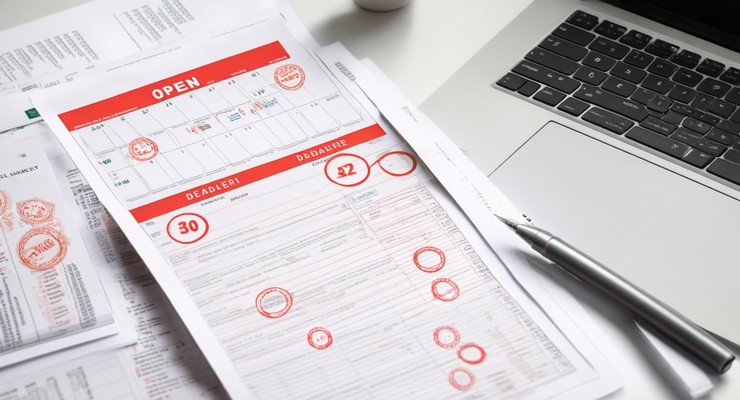
It's February 2026. Your practice has 47 tax returns due in the next three weeks. Three clients still haven't sent their documents. The phone is ringing. Your senior accountant is juggling two client calls and a filing deadline. Sound familiar?
For Irish accountancy practices—particularly the smaller firms that dominate Kerry and rural Ireland—this isn't an occasional crunch. It's the permanent reality of tax compliance season. The Revenue Commissioners don't care that your team is stretched thin. Deadlines are deadlines. And with seven out of every ten persons employed in Ireland's Services sector working in SMEs, the pressure on small accountancy practices is enormous.
This article shows you exactly how AI automation transforms tax compliance from a firefighting exercise into a smooth, predictable workflow. Not vague promises. Not science fiction. Practical steps you can implement in your practice starting this week.
The Problem: Tax Compliance Overload in Irish Accountancy Practices
Let's paint a真实的 picture. Your typical SME accountancy practice in Killarney, Tralee, or Listowel probably handles anywhere from 80 to 250 clients. Most are small businesses—the local hotel, the dental practice, the hardware shop, the farm account. These clients need their tax returns filed on time, their VAT returns submitted, their Corporation Tax payments made. And nearly all of them leave it until the last minute.
The result? Your practice experiences predictable chaos:
January to April becomes a 16-week sprint of 12-hour days. Your team is buried under paperwork, chasing clients for missing documents, and racing to file returns before the October deadline for self-assessment. Sound right?
Ongoing admin burden between busy seasons eats into profitability. Even when it's not crunch time, someone has to monitor Revenue deadlines, send reminders, chase outstanding documents, and keep the practice running.
Client communication overload. You spend inordinate time sending the same emails: "We still need your 2025 accounts," "Please send your VAT return," "Your tax payment is due next week." Multiply that by 150 clients and you understand the burden.
Manual data entry errors. When you're working under pressure, mistakes happen. Wrong figures entered, forms filed late, deadlines missed. The consequences range from client frustration to Revenue penalties.
Here's the reality: many Irish accountancy practices are running on spreadsheets, shared folders, and whatever ad-hoc system someone set up five years ago. There's no automated chase, no central deadline tracker, no systematic way to move work through your pipeline. You're essentially managing chaos with willpower.
How AI Streamlines the Tax Compliance Workflow
Modern AI automation addresses each of these pain points systematically. Let's break down exactly how it works:
1. Automated Client Reminder Sequences
AI-powered systems can automatically send personalized reminders to clients at preset intervals before deadlines. Here's what this looks like in practice:
- 60 days before tax return deadline: Initial friendly email with a checklist of required documents
- 30 days before: Second reminder highlighting what's still outstanding
- 14 days before: More urgent reminder with specific items needed
- 7 days before: Final call with deadline consequences explained
- 1 day before: Brief confirmation message The system sends these automatically based on each client's deadline. Your team doesn't need to manually track or send anything. The AI learns from client response patterns—when they're most likely to reply, what wording gets results—and optimizes accordingly.
2. Intelligent Document Collection
AI document portals allow clients to upload their paperwork directly into a systematized location. The AI can:
- Automatically categorize uploaded documents (invoices, receipts, bank statements)
- Flag missing information before it reaches your team
- Extract key data from documents using optical character recognition (OCR)
- Route documents to the correct client file automatically Instead of chasing documents, you're receiving them systematically. And when something's missing, the system knows before you do.
3. Deadline Tracking and Workflow Management
AI practice management systems give you a real-time view of every client matter, where it stands, and what's needed next. Think of it as a command centre for your practice:
- All deadlines visible in one dashboard
- Work automatically routed to team members based on capacity and expertise
- Bottlenecks identified before they become crises
- Automated escalation when deadlines approach
4. Regulatory Updates intelligence
Revenue changes rules. Tax deadlines shift. AI systems can monitor official sources and alert you to changes that affect your clients—automatically updating deadlines and reminding you of new requirements.
5. Predictive Workload Planning
Here's something powerful: AI can analyze your historical data to predict future busy periods. It knows, based on past patterns, that Client X always submits their returns late, that Client Y always needs additional information, that January through April is your crunch period. This insight allows you to plan proactively rather than react.
Real-World Example: A Kerry Accountancy Practice Transformation
Let's make this concrete. Consider a mid-sized accountancy practice in Killarney—let's call them "Southwest Accountants"—with 180 SME clients, four accountants, and two administrative staff.
Before AI automation:
-
Tax season (January–April): 12-hour days, 6-day weeks
-
Manual client chases: approximately 15 hours per week across the team
-
Late-filed returns: 8–12 per year, resulting in Revenue queries
-
Annual admin costs: approximately €42,000 in overtime and lost productive time
-
Practice profitability: modest, with most revenue consumed by overhead After implementing AI automation over a 6-month period:
-
Tax season hours reduced to 9-hour days, 5-day weeks
-
Manual chases eliminated: approximately 12 hours recovered per week
-
Late-filed returns: 2 in the first year (down from double digits)
-
Annual admin savings: approximately €18,000 in recovered time
-
Client satisfaction scores increased because of better communication
-
The practice took on 20 new clients without adding staff The numbers:
| Metric | Before | After | Change |
|--------|--------|-------|--------|
| Tax season overtime hours | 480 | 180 | -63% |
| Hours spent on client reminders | 600 | 45 | -92% |
| Revenue penalty incidents | 8 | 1 | -88% |
| Annual administrative cost | €42,000 | €24,000 | -43% |
| New clients added | 0 | 20 | +20 |
The key insight? Most of the improvement came from automation—not from working harder. The practice didn't add staff. They systematized what they were already doing manually.
Getting Started: Your 30-Day AI Implementation Plan
You don't need to transform everything overnight. Here's a practical 30-day plan to get started:
Week 1: Assessment and Setup
Days 1–2: Audit your current workflow. Document every step in your tax compliance process—from initial client contact to filing the return. Map out where the bottlenecks are. Where does work pile up? Where do things stall?
Days 3–5: Choose your AI tools. For most Irish accountancy practices, this means starting with practice management software that includes AI features. Look for systems designed for UK/Irish compliance—Revenue-specific functionality is essential. Popular options include Practice Web, Accountancy Manager, or similar platforms. Many offer free trials.
Week 2: Data and Integration
Days 6–9: Import your client data. Clean up your client records, import them into your new system, and verify everything transferred correctly.
Days 10–14: Set up basic automation. Configure automated appointment reminders, deadline alerts, and document request sequences.
Week 3: Client-Facing Launch
Days 15–18: Introduce the client portal. Send clients a brief introduction explaining the new system—emphasise that it helps them meet deadlines and avoid penalties.
Days 19–21: Go live with automated reminders. Start with a small segment of clients—perhaps those with approaching deadlines—and refine your templates based on their responses.
Week 4: Measure and Adjust
Days 22–25: Review the data. How many clients responded to automated reminders? How many documents came in without chasing?
Days 26–30: Optimize. Adjust timing, language, and triggers based on what works. Document your findings for busy season preparation.
FAQ: Common Questions About AI for Tax Compliance
Will AI replace my staff?
Absolutely not. AI automates repetitive tasks—it doesn't replace professional judgment. Your accountants still review every return, provide advice, and work with clients. What AI does is free up their time from chasing documents and managing deadlines so they can focus on high-value client work.
How much does AI practice management cost?
Pricing varies, but expect to pay between €50–€150 per user per month for quality practice management software with AI features. For a practice with 4 users, that's €200–€600 monthly. Most practices recover this cost within the first busy season through reduced overtime and improved capacity.
What about data security? My client data is sensitive.
Reputable AI practice management systems use enterprise-grade security—encryption, secure data centres, GDPR compliance. Ask about SOC 2 certification and where data is stored. For Irish practices, ensure the system complies with GDPR and Irish data protection legislation.
How long until I see results?
You'll see immediate benefits from automated reminders and document collection. Full practice transformation typically takes 3–6 months as your team adjusts and optimizes the system. Most practices report meaningful ROI within the first year.
I'm not technical. Will I be able to use this?
Yes. Modern practice management software is designed for accountants, not IT specialists. Most systems offer onboarding support, training resources, and customer service to help you get started. The learning curve is typically 1–2 weeks for basic proficiency.
Conclusion
Tax compliance doesn't have to mean chaos. The practices that thrive—the ones adding clients, growing revenue, and keeping their teams from burning out—are the ones systematizing their workflows.
AI automation handles the repetitive work: the chasing, the tracking, the reminding. Your team does the valuable work: understanding client needs, providing expert advice, and filing accurate returns.
The transition won't happen overnight—but it doesn't need to. Start with a single automated workflow. Measure the results. Expand from there.
If you'd like to explore how AI automation could work in your specific practice, AIMediaFlow in Killarney offers free consultations. We understand Irish SME needs because we work with businesses like yours every day.
Contact AIMediaFlow in Killarney to automate your accountancy practice. Your team deserves it. Your clients deserve it. And your practice's future depends on it.
Author: Serhii Baliasnyi, Founder & CEO, AIMediaFlow

Want to implement this for your business?
Book a free 15-min AI Infrastructure Audit
Message on WhatsApp →