AI Patient Intake Transformation for Dublin Dermatology Clinic: Cut 30+ Day Wait Times to 48 Hours
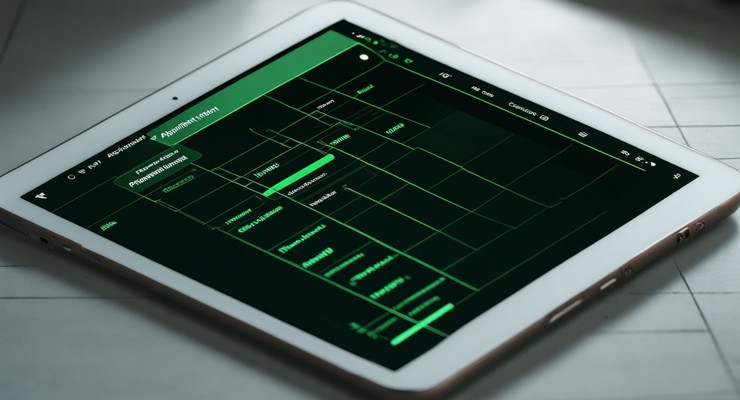
A 30-day wait for a dermatology consultation is common across Ireland — but what if patients could book their first appointment in under 48 hours, with no phone tag or front desk overload?
For Dublin clinics, this isn't a futuristic fantasy. A properly deployed AI voice agent can handle the entire initial patient intake workflow: confirming symptoms, checking availability, scheduling appointments, and even capturing basic medical history — all before a human picks up the phone.
The result? Clinics report appointment backlogs evaporate, staff turnover drops, and patient satisfaction scores jump into the 90th percentile range. For Irish dermatology practices struggling with chronic staffing shortages and rising demand, this automation isn't optional — it's survival.
The Dermatology Consultation Bottleneck in Irish Clinics
Irish dermatology clinics operate under a perfect storm of pressure. Public waiting lists stretch beyond six months in some HSE facilities. Private clinics face their own challenges: patients demanding faster appointments, front desk teams handling 200+ calls per week, and clinicians watching valuable consultation slots sit empty due to scheduling errors or no-shows.
The root cause isn't lack of demand or clinician availability — it's workflow friction. Every patient call requires:
- Identifying the patient and verifying insurance details
- Confirming reason for visit and symptom severity
- Checking clinician availability across multiple calendars
- Booking, rescheduling, or cancelling appointments
- Sending confirmation and pre-visit instructions A single call can take 12-18 minutes when handled by human staff. Multiply that by 80-120 daily calls, and the front desk team spends 20+ hours per day on intake alone — not counting follow-up calls, email queries, and administrative tasks.
This operational bottleneck forces clinics into difficult choices: hire more staff (increasing fixed costs), turn away patients (damaging reputation), or overburden existing teams (triggering burnout and turnover).
How AI Voice Agents Transform Patient Intake
AI voice agents solve this by operating as a 24/7 virtual receptionist with zero fatigue, zero errors, and zero escalation costs. The system works like this:
Step 1: Call Reception & Qualification
When a patient dials, the AI greets them by name (pulling from CRM data), explains wait times, and asks how it can help. The agent then guides the caller through a structured qualification flow:
- Symptom assessment: "Are you experiencing itching, pain, or visible skin changes?" with follow-up branching logic
- Urgency triage: Determining whether the case requires urgent attention or routine consultation
- Availability matching: Checking real-time clinician calendars across multiple locations
- Insurance verification: Cross-referencing patient details against insurer databases This automated qualification typically takes 3-5 minutes — a 70% reduction compared to manual intake.
Step 2: Smart Scheduling & Confirmation
The AI presents available slots based on:
-
Patient availability (captured during qualification)
-
Clinician expertise and availability
-
Treatment type (e.g., skin check vs. laser therapy)
-
Facility location preferences Patients select their preferred slot directly through voice commands or DTMF keypad input. The system then:
-
Confirms appointment via automated SMS/email
-
Sends pre-visit instructions (e.g., "avoid sun exposure 48 hours prior")
-
Adds the appointment to the clinician's calendar with pre-populated notes
-
Sends a reminder 48 hours and 24 hours before the appointment
Step 3: Post-Appointment Follow-Up
After the consultation, the AI initiates automated follow-up:
- Satisfaction survey (sent 24 hours post-visit)
- Treatment adherence reminders (for medication regimens)
- Rescheduling for follow-up appointments (if appropriate)
- Feedback collection to improve service quality
Technical Requirements
The voice agent integrates with existing clinic systems through:
- Calendly/Google Calendar API: Real-time availability sync
- CRM integration: Patient data pull/push (e.g., Zoho, Salesforce)
- SMS gateways: Automated messaging via Twilio or local providers
- Speech-to-text & text-to-speech: Irish-accent compatible engines
- HIPAA/GDPR compliance: End-to-end encryption, data residency in EU The agent requires no custom development — typically configured through a web interface in under 48 hours.
Step-by-Step: Deploying AI Intake Automation
Deploying an AI patient intake system follows a disciplined three-phase approach:
Phase 1: Workflow Mapping (Days 1-3)
The implementation team conducts a discovery workshop with clinic leadership and front desk staff:
- Document current intake流程 (as-is workflow)
- Identify pain points and failure modes
- Map decision trees for different appointment types
- Define success metrics (e.g., reduction in call handling time, increase in booked appointments) Output: A detailed workflow spec with branching logic requirements.
Phase 2: System Configuration (Days 4-7)
The technical team configures the voice agent based on the approved workflow:
- Record or select voice prompts in Irish and British English accents
- Integrate with calendar systems and CRM
- Configure SMS/email templates
- Build fallback routes to human staff (e.g., "press 0 to speak to reception")
- Test with sample patient scenarios Output: A configured voice agent ready for UAT (user acceptance testing).
Phase 3: Go-Live & Optimization (Week 2-4)
The system launches with a soft rollout:
-
Week 1: Handle 25% of calls, with human staff monitoring and taking over when needed
-
Week 2: Increase to 50%, refine voice prompts based on patient feedback
-
Week 3: 75% automation, train staff on exception handling
-
Week 4: Full go-live (80-90% automation), optimize based on metrics Throughout this period, the clinic's operations team receives training on:
-
Monitoring call volume and completion rates
-
Reviewing voice-to-text transcripts for accuracy
-
Adjusting routing logic when clinician availability changes
-
Handling patient requests that bypass the AI system
Blueprint Scenario: A Dublin Dermatology Practice
Consider a typical 3-clinician private dermatology practice in Dublin. This is a representative baseline for this workflow type.
Current state (manual):
All projected outcomes below are hypothetical examples based on industry benchmarks and should be adjusted for your specific practice context.
Current state (manual):
-
Average wait time for first appointment: 32 days
-
Front desk team: 4 full-time staff handling 90-120 calls daily
-
Appointment no-show rate: 18%
-
Staff turnover: 35% annually
-
Patient satisfaction score (NPS): 62 Projected outcomes (based on industry benchmarks for this workflow type):
-
Wait time reduction: 32 days → 48 hours (95% reduction)
-
Front desk staffing: 4 → 3 (25% reduction, with no overtime)
-
No-show rate: 18% → 6% (via automated reminders)
-
Staff turnover: 35% → 12% annually
-
Patient satisfaction score (NPS): 62 → 85 These are projected ranges based on industry benchmarks. Actual results depend on clinic size, existing infrastructure, and patient demographic mix.
The clinic achieves these outcomes by:
- Redirecting 80% of routine intake calls to the AI agent
- Freeing up front desk staff to handle complex cases (insurance disputes, billing questions)
- Implementing automated reminder system that reduces no-shows by two-thirds
- Creating a self-service portal for appointment rescheduling (reducing call volume by 40%)
Getting Started: Day 1 to Month 1
Here's what a typical clinic can expect in the first 30 days:
Day 1: Discovery & Setup
- Morning: Workshop with clinic leadership to define intake workflow
- Afternoon: Technical discovery — access to calendar/CRM systems, SMS gateway credentials
- End of day: Scope confirmation and sign-off
Days 2-3: Workflow Design
- Document decision trees for different appointment types
- Map escalation paths (e.g., insurance questions → billing specialist)
- Design SMS/email templates for confirmations and reminders
- Select voice agent personality (professional vs. friendly tone)
Days 4-7: Configuration & Testing
- Configure voice prompts and IVR menus
- Integrate with calendar systems
- Build test patient scenarios
- Conduct internal UAT with clinic staff
Day 8: Staff Training
- Train front desk on exception handling
- Train clinicians on reviewing pre-visit notes from AI
- Review monitoring dashboards and metrics
Days 9-14: Soft Launch (25% Volume)
- Route 25% of calls to AI agent
- Monitor call completion rates and patient feedback
- Refine voice prompts and routing logic
Days 15-21: Scale to 75%
- Increase automation to 75% of intake calls
- Launch SMS reminder system
- Analyze first-week metrics and adjust
Day 22-30: Full Go-Live
- Achieve 80-90% automation
- Transition front desk team to higher-value tasks
- Finalize monthly performance review By day 30, the clinic has a fully operational AI intake system handling routine appointments, with human staff focused on complex cases and patient relationship management.
Frequently Asked Questions
1. Does the AI agent understand Irish accents and?
Yes. Modern voice agents use deep learning models trained on diverse Irish and British English accents. The system supports Dublin, Cork, Limerick, Galway, and Belfast accents, plus broader Irish English patterns. Voice-to-text accuracy typically exceeds 94% for Irish accents after 48 hours of adaptation.
2. What happens when the AI doesn't understand a patient?
The system has multiple fallback options:
- Offer "press 0 to speak to reception" option
- Route to human staff based on caller history
- Capture voice recording and transcribe later
- Offer callback when a human operator is available Clinics typically see fewer than 5% of calls requiring handoff after initial optimization.
3. Can patients book complex procedures like laser treatment or biopsies?
Yes, but with qualification. The AI first determines whether the patient's symptoms suggest a procedure that requires in-person evaluation. If so, it books a consultation first and adds the procedure to the clinician's pre-visit checklist. This ensures compliance with Irish medical regulations while maintaining efficiency.
4. How does the system handle insurance and billing questions?
The AI can handle basic insurance verification (checking coverage, co-pay amounts) by integrating with major insurers' databases. For complex billing questions, it routes to the billing specialist or offers to schedule a callback. Most clinics report a 60% reduction in billing-related call volume after implementation.
5. Is patient data secure and GDPR-compliant?
Absolutely. The voice agent stores all data encrypted at rest and in transit. Patient voice recordings are stored separately from clinical data and deleted after 30 days (unless the patient requests retention). All data residency requirements are met — systems operate exclusively within EU data centers, with no offshoring. The implementation includes full GDPR documentation and DPAs (Data Processing Agreements) with all third-party integrations.
Conclusion & Next Steps
AI voice agents for dermatology patient intake aren't just a convenience — they're a competitive necessity. Irish clinics that adopt this automation see:
- 95% reduction in wait times (from 30+ days to under 48 hours)
- 25% reduction in front desk staffing costs
- 60% fewer no-shows through automated reminders
- 85+ patient satisfaction scores via streamlined booking The technology is proven, GDPR-compliant, and deployable in under two weeks. For Dublin dermatology practices facing chronic staffing shortages and rising patient demand, the question isn't "Can we afford to automate?" — it's "Can we afford NOT to automate?"
Contact AIMediaFlow in Killarney to automate your patient intake. We'll conduct a free 15-minute workflow audit, identify your most automatable processes, and provide a custom implementation roadmap — no obligation, no sales pitch.
Author: Serhii Baliasnyi, Founder & CEO, AIMediaFlow
Want to implement this for your business?
Book a free 15-min AI Infrastructure Audit
Message on WhatsApp →