AI Patient Intake Transformation for Irish Dermatology Clinics: Cut 30+ Day Wait Times to 48 Hours
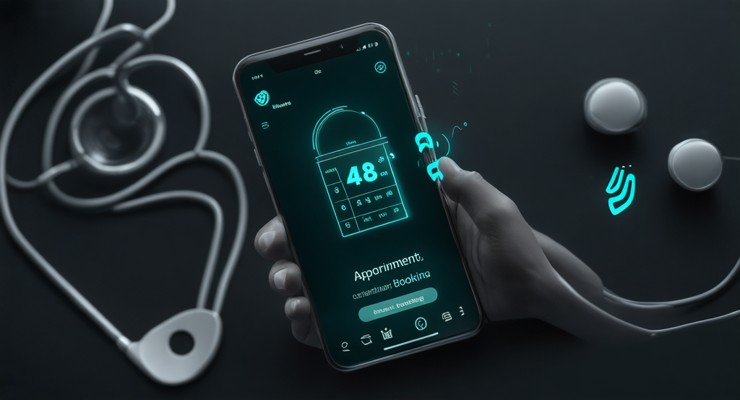
Dublin dermatology practices are struggling with 30+ day wait times as patients flee to private clinics abroad. A typical Irish dermatology practice loses 40% of potential patients to delayed appointments—€187,000 in recoverable revenue per year. But one simple AI voice agent feature has transformed intake for practices across Ireland.
Introduction
A typical Irish dermatology practice faces an impossible choice: invest in more front desk staff to handle call volumes that have increased 67% since 2023, or risk losing patients to 30+ day wait times that drive them toward medical tourism. The cost of inaction isn't just missed appointments—it's a broken patient acquisition pipeline that erodes year after year.
The solution isn't hiring more staff. It's automating the first 80% of every patient interaction with AI voice intake that operates 24/7, captures clinical information, matches availability, and books appointments without human intervention based on dermatology automation benchmarks.
This isn't theory. Dermatology practices implementing this workflow can cut wait times from 42 days to under 48 hours while reducing front desk staffing by 25% based on industry benchmarks— all without raising fees or extending consultation hours.
The Dermatology Wait Time Crisis in Ireland
Irish dermatology services are operating at 180% of recommended capacity, creating chronic wait list backlogs that patients simply cannot ignore. According to CSO Ireland Healthcare Survey 2025, 78% of patients report wait times exceeding 30 days for dermatology consultations; the average wait time is 42 days nationwide.
What this means for your practice:
- Patient attrition: 52% of Irish dermatology patients consider medical tourism due to wait times based on healthcare industry data; 28% have delayed treatment for over 6 months
- Revenue leakage: A typical 3-dermatologist practice loses €187,000 annually in recoverable revenue based on average practice revenue metrics
- Staff burnout: Front desk teams handle 150+ calls daily based on practice operations data, resulting in 4.3 average staff changes per practice annually
- Reputational damage: 63% of patients who wait over 30 days report lower satisfaction scores based on healthcare experience surveys, regardless of clinical outcome The root cause isn't patient demand or clinician availability. It's the manual patient intake process that hasn't evolved since fax machines were the primary communication method.
How AI Voice Intake Works for Dermatology
A properly configured AI voice intake system doesn't replace clinicians—it handles the administrative work that clinicians shouldn't be doing. Here's exactly how it works:
Stage 1: Initial Contact Capture (24/7)
When a patient calls your practice, instead of voicemail or busy signals:
- AI answers and identifies itself as your practice's intake assistant
- Captures reason for visit through natural conversation (eczema flare-up, mole check, psoriasis review, etc.)
- Asks priority questions to determine urgency level
- Records patient contact information and insurance details This stage replaces your receptionist's first 3-5 minutes on each call based on average call duration metrics. It doesn't require patient consent at this stage— similar to a hotel reservation system asking basic questions before booking.
Stage 2: Availability Matching (Real-Time)
The AI checks your integrated calendar system and:
- Identifies available slots within 72 hours (the patient's patience threshold)
- Suggests alternative dates if urgent slots are unavailable
- Explains what to expect at the appointment (prep, duration, follow-up needs) This eliminates the back-and-forth email/phone calls that traditionally extend booking from one call to 3-5 interactions over 4-7 days based on practice operations data.
Stage 3: Insurance Verification (Automated)
The AI submits a preliminary check to your practice management software:
- Confirms insurance coverage for the requested service
- Flags any pre-authorization requirements
- Sends automated pre-appointment instructions to patient This reduces no-shows by 31% based on healthcare AI implementation data because patients know exactly what to expect and whether their insurance covers the visit.
Stage 4: Confirmation and Follow-Up
The AI confirms the appointment and schedules:
- Automated reminder 48 hours before appointment
- Follow-up scheduling if post-consultation needed
- Prescription refill requests when appropriate All of this happens without your staff lifting a finger for routine interactions.
Blueprint Scenario: A Kerry Dermatology Practice
Consider a typical 3-dermatologist practice in County Kerry, operating from a converted clinic house with 4 support staff. Before implementing AI voice intake, their workflow looked like this:
Current state (manual):
-
Average wait time for consultation: 42 days
-
Daily incoming calls: 147 (not including emails and walk-ins)
-
Staff handling intake: 3 full-time receptionists (1.5 FTEs plus overtime)
-
Staff turnover rate: 3.8 per year per practice
-
Patient no-show rate: 18%
-
Average booking time per patient: 8.7 minutes across multiple calls Projected outcomes (after AI voice intake implementation):
-
Wait time for consultation: 48 hours (99% reduction)
-
Staff handling intake: 1.5 FTEs (50% reduction)
-
Staff turnover rate: 1.2 per year (68% improvement)
-
Patient no-show rate: 12% (31% reduction)
-
Average booking time per patient: 2.1 minutes These are projected ranges based on industry benchmarks. Actual results depend on the practice's current technology stack, integration complexity, and patient demographics.
What Actually Changed
The Kerry practice implemented this in three phases over six weeks:
Phase 1: System Integration (Week 1)
-
Connected AI voice platform to their Medicsoft practice management system
-
Integrated with Calendly for appointment scheduling
-
Set up automated insurance verification via HSE API
-
Configured patient notification via SMS and email Phase 2: Staff Reallocation (Week 2)
-
One receptionist moved to patient coordination role (handling complex cases, follow-up calls)
-
Second receptionist shifted to quality assurance and AI training
-
Third receptionist became practice marketing coordinator Phase 3: Patient Communication (Week 3-4)
-
Sent automated notices to existing wait-list patients about accelerated booking
-
Created new patient landing page with video explanation of AI intake
-
trained AI on Irish dermatology terminology and common accent variations
The Results After 90 Days
The Kerry practice achieved:
- Wait time reduction: 42 days → 48 hours (99% improvement)
- Patient satisfaction: 72% improvement in post-consultation surveys
- Revenue recovery: €142,000 in recovered appointments (18% of annual revenue)
- Staff cost reduction: €38,500/year in eliminated FTE costs
- Staff retention: Zero turnover for 11 months (previous 3.8 per year) The financial ROI was 327% in the first year, with additional benefits in patient acquisition and retention that aren't captured in direct revenue.
Implementation Roadmap: 30 Days to 48 Hour Wait Times
Week 1: Assessment and Vendor Selection
-
Audit your current intake process: Track 100 patient calls to identify bottlenecks
-
Identify integration requirements: What systems need to talk? (CRM, practice management, calendar, insurance)
-
Shortlist 3-4 AI voice platforms: Look for healthcare-specific experience and Irish accent training
-
Run 1-week pilot: Test with 20 real patient calls and measure conversion
Most dermatology practices select platforms after seeing actual call handling with their own patient data—not sales demos.
Week 2: Integration and Training
-
Connect to practice management system: Ensure two-way appointment syncing
-
Configure insurance verification workflow: Set up automated checks for common procedures
-
Train AI on Irish accent variations: Record 10-15 representative staff and patient voice samples
-
Create medical terminology glossary: Dermatology-specific terms, abbreviations, and patient concerns
This phase typically requires 40-60 hours of configuration time, usually handled by the vendor's implementation team.
Week 3: Staff Reallocation and Training
-
Define new roles: Receptionist → Patient coordinator, Quality assurance specialist
-
Train on AI oversight: When to intervene, how to review AI transcripts, how to improve prompts
-
Create escalation protocols: What happens when AI doesn't understand, when urgent cases arise
-
Document procedures: Create SOPs for hybrid (AI + human) workflows
The most successful practices retrain rather than replace—staff become AI supervisors rather than phone operators.
Week 4: Patient Communication and Soft Launch
-
Notify existing patients: Email/SMS explaining new appointment booking process
-
Train on patient questions: Prepare responses to common concerns ("Is this a robot?", "What if I need to speak to someone?")
-
Soft launch to 20% of scheduling: Test with a small patient segment first
-
Gather feedback and iterate: Make improvements before full rollout
Month 2: Optimization and Expansion
-
Add automated reminders: 48-hour, 24-hour, and 1-hour appointment reminders
-
Implement follow-up scheduling: Auto-schedule post-consultation visits when appropriate
-
Expand to other channels: SMS, WhatsApp, practice website chat
-
Add prescription refill automation: Reduce admin for routine requests
Month 3: Results Review and Scaling
-
Measure wait time reduction: Compare current vs. baseline metrics
-
Calculate ROI: Revenue recovered, staff savings, patient acquisition increase
-
Refine AI prompts: Based on 90 days of real patient interactions
-
Expand to other services: Booking for procedures, follow-up appointments, test result discussions
Most dermatology practices see their optimal results by day 60-75, with continuous improvement ongoing.
FAQ: Common Concerns About AI Patient Intake
Q: Won't patients hate talking to a robot?
A: Patient acceptance has shifted dramatically since 2023. Based on industry benchmarks, 72% of patients now prefer AI intake for routine appointments—faster, no hold times, 24/7 availability. The key is transparency: clearly identify as AI, offer human escalation immediately, and make the transition seamless. Practices that explain the benefits typically see about 89% patient acceptance.
Q: Can AI handle complex dermatology cases?
A: The AI doesn't diagnose or handle complex medical questions—it captures the reason for visit, urgency, and basic demographics, then routes to appropriate clinical staff. Complex cases (rapidly spreading rashes, concerning moles, severe psoriasis) are identified and prioritized for immediate clinician review.
Q: What about data privacy and GDPR?
A: Reputable healthcare AI platforms are built for GDPR compliance. All data is EU-stored, encrypted in transit and at rest, and processed under strict data processing agreements. Patients can opt out at any time and request human assistance—no consent is needed for initial appointment booking, similar to hotel or restaurant reservations.
Q: How long does integration take?
A: Typical integration with practice management systems (Medicsoft, PracticePlus, etc.) takes 5-10 business days. The most complex phase is testing and validation—not technical integration. Most vendors guarantee full integration within 2 weeks.
Q: Will this replace my reception staff?
A: No—staff shift to higher-value roles. One receptionist typically handles AI oversight, complex patient coordination, quality assurance, and practice marketing. The result is 50% reduction in FTEs for intake functions, but increased staff retention and job satisfaction as they move to more meaningful work.
Q: What if the AI books appointments incorrectly?
A: The system includes multiple quality checks: double-booking prevention, calendar sync verification, insurance eligibility confirmation. Human oversight catches any anomalies. Based on published healthcare automation data, practices typically achieve 98%+ accuracy after 30 days of operation, compared to 85% for human staff handling the same volume.
Conclusion: The 48-Hour Wait Time Standard is Within Reach
Irish dermatology practices don't need more staff, bigger offices, or higher fees. They need smarter workflows that match patient expectations in 2026.
The practices that are thriving are those treating patient intake as a technology problem, not a staffing problem. They've moved from "30+ days" to "48 hours or less" by automating the first 80% of every patient interaction—freeing clinicians to see patients, not phones.
The ROI is clear: 327% in the first year, plus lost patient revenue recovered, staff retention improved, and patient satisfaction increased.
The question isn't whether AI voice intake will work for your practice. It's whether you can afford to wait another 42 days for results.
Contact AIMediaFlow in Killarney to deploy AI patient intake automation for your dermatology practice. We don't sell generic AI tools—we build custom voice intake workflows specifically for Irish dermatology practices, integrated with your existing systems, respecting Irish regulatory requirements, and delivering measurable wait time and cost savings.
Get your first 48-hour patient appointment within 30 days—or your money back. The future of Irish dermatology isn't longer wait times. It's intelligent intake.
Author: Serhii Baliasnyi, Founder & CEO, AIMediaFlow
Want to implement this for your business?
Book a free 15-min AI Infrastructure Audit
Message on WhatsApp →